Search This Blog

Saturday, September 27, 2014

First Thoughts: Dungeons and Dragons 5

I’m not going to review the new edition of Dungeons and Dragons. Ok I lied. I totally wrote a review. I’m a liar, though. This is the opposite of news. But it was an accidental lie. Which is a step in the right direction if you ask me. I’ve been playing with this system all summer thanks to the playtest information. I can give it my recommendation wholeheartedly. If you like tabletop gaming and want an excellent system that encourages and supports roleplaying then go buy the handbook.
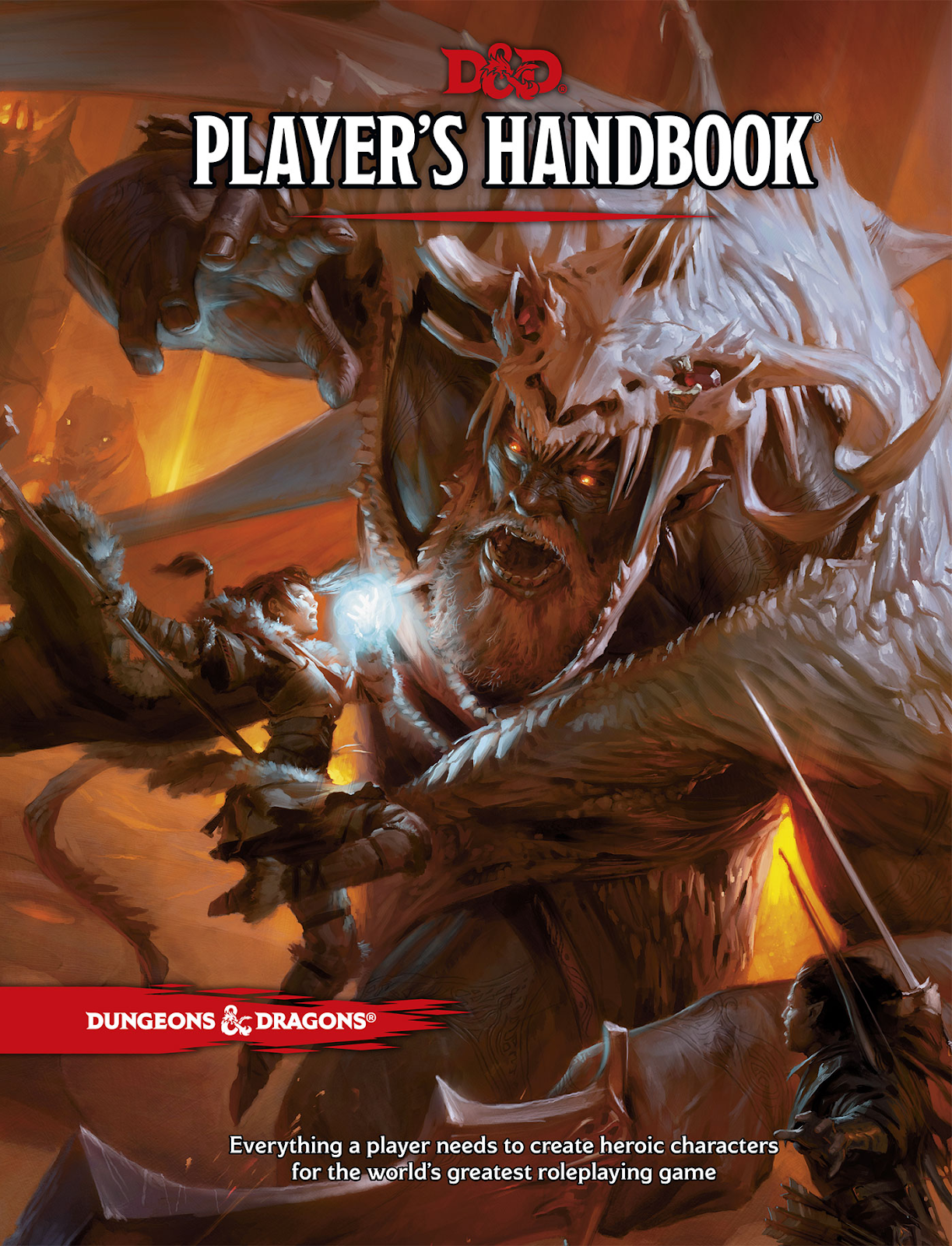


I do want to talk about my favorite things about this system. The reasons why, in my opinion, it is good and not bad and also it’s awesome. There are a few key ways D&D 5 stands out above a system like Pathfinder.

Advantage and Disadvantage

If you’ve been reading any information about D&D 5 then you have heard these words. Of all the new changes to Dungeons and Dragons the introduction of the advantage system is the single most important. The advantage system does away with the complex calculus every gamer has to know and understand before they can calculate how much damage their shortsword attack does. Gone are the days of having 4 different +2 modifiers to add to an attack based on situational differences.

Having Advantage means that in a situation where you would roll 1d20 to test the success of an action you instead roll 2d20 and take the better roll. Disadvantage is the opposite: you roll 2d20 and you take the worse. It’s remarkably simple but it completely changes the pace of a game.

Do you have some sort of situational benefit? Then you have advantage.

Do you have some sort of situational drawback? Then you have disadvantage.

Regular situation? You and your opponent have equal benefits and drawbacks? Business as usual, then.

My group loves this system. As a Dungeon Master I love this system. A player successfully does a cool flip kick off a wall into combat? Advantage! A player describes a cool and unique attack? Advantage! A player is standing in waist high water and wants to cast a lightning spell? Disadvantage. A player is lying on their back trying to shoot a longbow? Disadvantage. It has made my life so very easy.

Backgrounds

I have a series of charts that I make players roll or choose from when they first make a character to help them establish their character’s background, fear, impulse, goal, and bonds. I developed this over the summer so that my D&D Next group would be able to flesh out their characters easier. Dungeons and Dragons 5 included backgrounds, ideals, flaws, and traits as a core concept with its own section in the handbook. I may have cried of joy.

If you have read this blog at all then you know I loves me some o’ that there roleplayin’. It is, in my opinion, the most important part of any ROLEPLAYING Game. But I may be reading something into the name. Maybe to other people RPG’s are all about math or something. Sounds like school to me.

Anyway, I like to incorporate character backgrounds and traits into the situations I provide for them so that players have to think carefully and creatively about what they are going to do. You have an estranged father that you still love but don’t talk to? Guess who just recently joined the villainous dragon cult?! You’re searching the world over for your master’s murderer and you only know they have nine fingers? Guess who sees nine-fingered people everywhere?! You’re a half-orc? Guess who’s going to see other half-orcs to fight with?!

Those are just some examples but I take this sort of thing very seriously in my own way.

The Classes and Races

I like diversity in my RPG world. Humans and elves and dwarves are great but in a world of gods, dragons, devils, demons, mythological creatures, and a thing called the Underdark I want something a little more spicy when it comes to race options. Like gnomes at least.

D&D 5 does not skimp on the racial options. Dragonborn (half-dragon folks) and Tieflings (half-devil folks) are in the core races alongside halflings and half-elfs. Drow are a sub race of elves (because of course they should be). Usually humans are a solid choice because of their racial abilities but with the options presented in this handbook, I have actually made very few humans and seen very few get made. It’s a nice departure from tradition.

But what about classes you ask? Thank you for getting me back on track. The magic classes are all diverse and have more options from the start than ever before. A Sorcerer doesn’t feel like a Wizard and they both don’t feel like Warlocks. Druids kick ass and take names. Clerics and Paladins … are still doing their thing. And every class has some method of getting spells without requiring you to take levels in Wizard. Eldritch Knight (a fighter with spell abilities) is just a sub-class of Fighters. Arcane Trickster is a sub-class of Rogue. Monks have two different paths that lead to two different kinds of spells.

I like the races and classes. I thirst for more but I’m not disappointed by what I have been provided. I hope future handbooks offer me some Psionic options and I still long for the day when 4th edition’s Warlord class sees the respect it deserves.

This is getting a bit wordy so I’ll close things up with my final thoughts. Tabletop gaming is all about coming together as a group and exploring cool worlds with dragons and magic and treasure. It should be something accessible and fun while still being challenging and intricate. D&D 5 is all of these things.

See, I’m a liar. But not about D&D 5. It’s totally bitchin'.

Farmane, Papa Dungeon Master

Wednesday, September 24, 2014

System Spotlight: Tiny Dungeon

My comrade and I may have a tiny problem when it comes to Kickstarter. He can’t resist the urge to buy fantasy coins, new card games, and dungeon master gear. I can’t resist a good looking system or a pack of cheap minis. Just last month, I gave into my obsession.'


Friends, let me introduce you to Tiny Dungeon.

The Basics

Tiny Dungeon is a super simplified game system whose basic rule book is all of 21 pages long. Players need 3 six-sided dice and a character sheet that uses a half-sheet of paper. The DM doesn’t need much more than that.

Character creation takes under 10 minutes. Players choose a race and a set of traits (rather than a class) and can immediately jump into the game. The game’s creator has asked that until the official release of the game in December, reviewers not go too in depth about character creation so I’ll stop there. But I can assure you, it’s simple but has great potential for diversity.

On that note, the creator is heavily involved with players. I was excited to gain special access to the Smoking Salamander (the company that created Tiny Dungeon) forums, where players are posting campaign ideas, house rules, and new creatures. In many cases, these ideas are being reviewed and discussed with creator, Brandon McFadden. There is even a How To Train Your Dragon game setting being created. Seriously. I need to play this game.

The Not-So-Basics

The simplicity of the game lends itself well to brand-new, baby roleplayers or to kids. That being said, this system is definitely more roleplay heavy. D&D 4 this is not.

For one, Tiny Dungeon chooses to spit in the face of formal magic systems. Instead of a long complicated spell list and a set number of uses per day, Tiny Dungeon divides magic into a few categories and lets players and DMs decide what goes and what doesn’t.

Players that want to use magic can take the magic based traits, which pretty much just say that you have access to magic. What you choose to do with it is up to you and of course, your friendly neighborhood DM. Create a small fire? Sure. Send out a little magic missile? Cool. Raise an army of skeletons from nothing? No way.

As someone who plays mostly magic classes and likes to come up with creative ways to use small spells and cantrips, this system is a godsend. There are ways to gain stronger magics, but it mostly requires scrolls or magical items. This may not sit as well with the type of magic user that loves their 10d10 fireball spell. Sorrynotsorry. Magic is almost exclusively roleplayed and I love it!

Also, there is no armor system and weapons all do the same amount of damage. For serious. So wield a mace if you want, but you could just as easily choose a dagger. It all depends on what the character that you are creating would choose to use. Roleplaying!

What We Liked

Just this past Sunday, I ran a game of Tiny Dungeon. (On an amusing side note, someone questioned our Sunday morning game time. My comrade replied that it was like our church. The tag line we came up with: Praise be to dragons, hallowed be their dungeons. We’re blasphemous sons of bitches up in here.)

It was a silly concept with a fairly open world map, dwarves that spoke with Minnesota/Canadian accents, and a witch that sounded like uber-Scottish Mrs. Doubtfire. The players fought hoards of red squirrels, played match-maker for a pair of gay trolls, convinced the witch that her house was possessed by a demon so that she burned it down, and addressed the problem of illegal immigration of kobolds into a city by creating a mutually beneficial taxation and trade policy. Apparently, my players aren’t afraid to deal with the hot topics of today. Shit got deep. None of this was planned or part of the adventure goal in any way.

We all loved the inclusion of Goblins and a salamander race called the Salimar into the basic races of the game. They’re just rad. The party consisted of two goblins and one Sarven Salimaris. Smoking Salamander has even produced miniatures for the new races.

I actually underplanned, even with an open world map that had 4 possible routes, because of how quick combat runs. It was so easy! Fights were still intense, there was still plenty of chances to die, but there were no numbers to add. Setting up monsters to fight was just as easy, if not easier, than character creation. I improvised all of the fights in the adventure and they worked out perfectly. Gotta love that.

Final Thoughts

It is well worth it to get this game when it comes out in December. The rules make it easy to customize races, settings, and items to fit any theme or campaign idea. The game lends itself especially well to adventures that don’t take themselves too seriously and groups that like to run rampant through your carefully laid plans.

You may want to avoid this game if you need those elaborate rules for peace of mind. Here, there is no leveling, no classes, no definitive magic system. It’s like the wild west of games, and if you aren’t ready to be your own law then it’s best to stay out of the saloon (Or something like that. I don’t really do metaphors).

For anyone looking to get in on the ground floor, it’s too late to join the original Kickstarter. However, Smoking Salamander is running a second Kickstarter to produce a set of meeples and has included add-on options from the original Kickstarter. There is talk of producing a full set of Salimar and Goblin minis as well, so keep an eye out.

Baby DM out.

Monday, September 22, 2014

NPC Creation Part II

NPCs should always, always return. Especially if they’re awesome.

I create a lot of memorable NPCs. The pirate captain with no sense of direction who follows the advice of a trickster monkey is one fine example. The warforged monk who acts a lot like Olaf from Frozen because he spent most of his existence serving as a pillar in a king’s castle is a beloved returning character. The barbarian half-orc who dresses in proper Samurai coats and seeks perfection in fighting is an excellent part-time ally for a party.

There’s one character who came about very organically, however. I planned out my pirate captain, my warforged monk, and my half-orc ronin. They were intentional decisions. I found pictures of them if I could. I wrote down their histories and their beliefs and their goals. But sometimes an NPC appears that changes a group forever. This NPC has come back time and again no matter the setting and no matter the group dynamic. He is a wise individual, eternally helpful and beyond beloved.

His name is Gregor.

He is a goblin.

Some games ago, I was a humble player. We had a halfling rogue in the party who was a wee bit eccentric. While trying to sneak into a goblin cave one night across hundreds of yards of open grass that halfling managed to evade the sight of the goblins for a good long while. And then one spotted her. And then another. And another. Until finally all but one goblin had seen a nimble halfling sneak up to their cave entrance to cut their alarm wind chime down. The goblin that hadn’t spotted her had failed every check to see her until the other five party members came roaring out of the forest to descend upon the goblins.

He spent the fight picking his nose. We kept him and named him Gregor and he was a good goblin.

Another party found themselves in the Mines of Madness: a PAX module produced by Scott Kurtz and Chris Perkins (my hero!). Within the mines was a goblin trapped by a group of cockatrices beneath a mine cart. The party saved him, changed his name immediately to Gregor, and kept him with them until they found themselves trapped in a deadly room. They would have to sacrifice one of their number to move on. They argued and bickered and consulted divination spells for some time until finally a quiet, high-pitched voice called out “I’ll do it, friends.”

The party nearly came to blows. Only one of the eight players was willing to sacrifice Gregor. The halfling monk leapt upon the altar and promised to kill anyone who dared touch Gregor with a blade. As a dungeon master, I was very pleased. Finally the barbarian (who had carried the party through many of their fights) climbed upon the altar and stabbed himself in the heart, freeing the party from their dilemma.

They gave Gregor all the copper in the dungeon and a reduced share of the total loot including a handful of gems. He went on to greatness.

My newest group, running the new Dungeons and Dragons 5 system, is working their way slowly through the Lost Mine of Phandelver (HEAVILY MODIFIED, OF COURSE). Since my groups can never leave well enough alone, they cast some charm magic on one of the goblin ambushers in the very first encounter. Guess what his name was?

It was Gregor. I wanted to give you more time but we’ve got things to do.

He led them through traps, convinced the goblin sentries that he was there alone, and warned them about upcoming wolves. All of it done in a sing-song, high-pitched, child-like voice that couldn’t sound threatening if you tried.

They’re gonna keep Gregor. Every party keeps Gregor. Everyone loves this freaking goblin. And I think I know why.

  • Helpful NPCs are a party’s best friend. I’ve been reading a lot of articles about agency lately. Basically you always want your players to be making informed decisions so that when there are consequences they blame themselves and not you. Having a helpful NPC among the party who knows something about upcoming dangers but is vague, ill-informed, or purposefully mischievous gives the party more options and opportunities. Plus it gives the dungeon master an agent among the party who can help lead them to the right thing or the wrong thing. It speeds up games and takes out a ton of unnecessary guesswork. 
  • Funny NPCs help lighten the mood. Some people take tabletop gaming too seriously. I don’t mean that they spend too much time or money on it (our favorite saying is “We have a problem, and that problem is too few minis”). What I mean is that they treat this world of halflings, goblins, orcs, dragons, dungeons, magic, and snake-people very seriously and expect it to function like a real world. Well the real world has mildly helpful hilarious people in it and sometimes those are the people you meet. A funny NPC who helps the party can help alleviate tension between a group that has mixed alignments or to help calm down the person who takes roleplaying a barbarian far too seriously. 
  • It gives players something to protect. Players are protective of their character. They are protective of their character’s stuff. They are protective of their NPC allies. I have noticed, among my players, that they aren’t all that protective of other people’s characters (I may be guilty of convincing other player’s characters to test dangerous routes and poisons). Giving them an NPC who is willing to do dangerous work forces them to sort out their priorities. Someone has to be sacrificed upon the altar but Gregor sure has been nice and helpful so far with his advice and knowledge about the dungeon. Maybe we should sacrifice a player character. 
  • It can unite the party. Gregor the Goblin has a unique ability to bring people together. Evil characters like having a goblin minion who will do their grunt work. Good characters like having a redeemed goblin who is helping do good work. Neutral characters tend to like having anyone helping them acquire their gold or their justice (depending). Gregor’s motto is “I’m helping!” and he helps people accomplish their dreams whether they want to raise a dracolich or end the reign of the Bonemaster. Gregor just wants you to be happy no matter what. 
What’s my one rule? NPCs should always, always return. Especially if they’re awesome.

Farmane, Papa Dungeon Master.

Monday, September 1, 2014

Season Finale

This Saturday I ran an intense season finale for my party to complete as many character arcs as I could while providing some neat hooks for the next season of our One-Shot-Verse. Villains, stolen magical artifacts, time travel, God interactions, and overly euphoric illithids. It was a weird day. And I killed 3 players, so I felt pretty good.

The plotlines that were sealed:

Carolina vs. the Embers sisters: Carolina Braxwell, de facto leader and captain of the group, completed her vengeance streak and finally killed the last of the three Embers sisters by shooting her in the face with a crossbow. It was a very emotional moment for the party. She also got a castle out of the deal and learned that all she really wanted in the world was a sky-ship full of treasure to park at her castle full of treasure.

Sam Mu’rye and the Nine-Fingered Mage: Sam Mu’rye, resident Bamboo Elf of the party, saved his master thanks to a little time travel but still wanted to bring justice to the nine-fingered dragonborn sorceress who tried to kill him. Turns out that the dragonborn had been working for Carissa Embers. Sam charged across the field, only to be severely wounded by another of his villains, Nyn Jha. A 12 second time jump to the past gave him the heads up he needed to prepare himself to charge across the room, keep himself safe, and end the life of the nine-fingered mage once and for all.

Of course Nyn Jha wasn’t finished with him. She flustered him with a flurry of blows and forced him to make a mistake. He cut off his own hand and fell, allowing her to steal one of his magical swords and disappear into the shadows. Sam rose from the dead shortly after, tasked by the God of Balance to continue his work within the world.

Sarven Sylmaris meets his match: Sarven is an interesting character that needs some serious therapy to work through his father issues and his narcissistic complex. He lives his life in constant search of glory, trying to make ‘Sarven Sylmaris’ a household name. He has made enemies along the way and had to eliminate an old friend.

But what truly shook Sarven to his core was the appearance of his twin sister, Varessa Sylmaris. She was raised by their father, who gave her all the opportunities she would need to succeed. Where Sarven is a rogue and a criminal, Varessa is a folk hero and a beloved star of song and tale. When she leaves her sigil behind, people are thrilled. She left without a fight, telling Sarven to speak to their father to learn more about his lot in life.

Zugg meets the God of Orcs: Zugg’s motivation is a strange one to explain. He likes to kill things. Certain things. Most things. Zugg rarely approaches death, though has been brought to the brink by a swordmaster before. On Saturday, he fell in battle for the first time, traveling beyond the Material Plane and into the eternal battleground of Gruumsh’s realm. But Zugg’s a good half-orc. He puts the Orc in Half-Orc and Gruumsh is impressed. Zugg was sent back into the world, compelled inexorably by his new god to bring the Elves under the heel of the Orcs.

It took about 6 hours and there was also an interaction with a time-controlling Elder God who just wanted a couple of sacrifices. They released a new villain from his magical prison and gained control of a truly powerful artifact. They befriended illithids, gave an imprisoned paladin an existential crisis, and managed to avoid fighting the two dogs that I really didn’t want them to kill.

I think it was a pretty successful season finale. This entire One-Shot-Verse process has taught me more about dungeon-mastering than any previous games I have run. Tabletop Gaming features a strange sort of social contract between small groups. One person crafts
and maintains a universe in their mind and offers opportunities for players to experience fantasy and wonder they never would in the modern world. And in return players should strive to act according to the character they have created to weave an interesting narrative that everyone takes part in.

At least that’s my opinion about Tabletop Gaming. Maybe I’m weird.

Anyway, these past few weeks have been article-light and I apologize for that. Life is busy. For upcoming weeks I will be posting articles about the new game I am running for Dungeons and Dragons 5, the new edition released recently. I am running a Friday game for new players and should be working them through the book starting at level 1. There should be some good articles in the future.

Thank you for reading thus far and I hope you enjoy what we’ll be cranking out in the future.

What's my one rule?

Farmane, Papa Dungeon Master.

Wednesday, August 20, 2014

Know When To Hold’em, Know When To Fold’em

After a long absense, our gaming group was finally able to get together for a game. The real world sucks sometimes (like we’re actually required to attend jobs to make money, which is dumb), that’s why we escape to a fantasy one. So we were all excited to be entering our one-shot verse again and leaving our troubles behind. Except that’s not how things worked out.

By the time we were an hour and a half into our game, our DM was ready to murder us all. We players had decided to be petulant. All of us were tired from the week and taking a nap on the floor was sounding like a really nice option. And much like 2-year olds, we expressed this through immaturity and temper tantrums. So in this hour and a half we insulted some people in a tavern, poisoned each other, had a stand off with the good guys (we’re an evil party, remember), burned down another tavern, attempted to extort money from the tavern owner in exchange for saving him from said burning tavern, stole all of this tavern owner’s valuables, and then once again fought amongst ourselves.

It didn’t help that our party was made up of a female Drow assassin (who somehow ended up being the group leader and spokesperson), Zugg the half-Orc Fighter, a falsely philosophical Dragonborn Monk, and a samurai with a lot of swords and truly questionable morals.

It was about dinner time, so our DM declared it time for a break. He needed a reprieve from our in-fighting and really scary decision making processes, and a trip to the game store and a local fast food joint would be a perfect distraction. About an hour (and some ibuprofen) later, we reconvened.

The game improved from there. Energy was low for a while after our dinner break, but by the time our samurai got a hold of the time travel artifact and went back in time to change his back story in order to save his master who had been murdered, we were all invested once again. The DM was able to handle our antics and we finished the adventure on a high note, ready for the next game.

The moral of this story? Sometimes, you need to step away from a game in order to reinvest yourself in its success. This could mean taking a 5-minute water break, an hour dinner, or even putting the game off to another day. If you feel that you can’t enjoy playing because you’re tired, or unfocused, or you developed a headache because your Drow just suggested letting a bunch of people die in a fire because they couldn’t pay her to save them, call a time out. It will be more enjoyable for you and for all of your fellow players if you can bring your best to the game table.

Baby DM out.

Friday, August 15, 2014

The Duel

“You killed my sister!” Arissa Embers called out.
“She touched my stuff,” Carolina Braxwell responded.
Then all hell broke loose in Nine Mead Hall. Crossbow bolts were answered by bolts of fire and a final bolt of lightning from Arissa Embers brought Carolina to the ground with a smoking hole in her chest.
“This is for my sister,” Arissa said as she knelt down to finish Carolina off. But Carolina rolled a nat 20. Twice.

Lords, ladies, and variations thereupon I must apologize for our recent lack of content. The reasoning is good. Or at least moderately not bad. Life happened. Specifically teenagers. Teenagers that need me to teach them history. So I’ve been out of commission for a bit. I come back to you now at the turn of the tides, on this Friday when I feel I’ve had enough sleep.

Combat in tabletop roleplaying games is the main draw for many players. Zugg, for example, doesn’t really pay attention unless he’s fighting something, about to fight something, or making attempts to pick a fight with something. It’s amusing but can sometimes detract from the tension or drama in a roleplaying scenario. Still, having him regularly fist bump orcs hard enough to sever their wrists is worth all the times he has ruined or destroyed my plans.

I like running combat, especially in DnD Next. I feel I’m pretty darn good at it largely because my players and I care more about combat feeling and sounding epic than if it strictly follows the rules. In many instances combat might only function for one round before roleplaying gets in the way. This is why a Samurai and a Warforged Cowboy can have a philosophical stare-off down a tavern hallway while a Drow Poisoner waits to make her move and Sarven Sylmaris fish-flops his way over a balcony into the waiting arms of an orc below. Sure the Warforged shot at Sarven and the Poisoner is about to hit the whole second story with a Darkness spell but for a moment everyone’s poised and thinking about how cool their next move will be.

My favorite use of combat, though, is the duel. I will admit that I’ve watched the fight between Inigo Montoya and the Man in Black more times than I can count (at least a hundred) and my favorite instance of written combat is the duel between Oberyn Martell and the Mountain in Storm of Swords. I love duels for their tension and their drama and their awesome vocal exchanges. In a tabletop setting a duel can be the perfect cut away during a moment of roleplaying or the epic conclusion to a night of tavern based debauchery.

I try to create villains that my characters hate or have pissed off enough to create the kind of situation that would necessitate a duel. With my recent group I’ve hit 3 out of 4 (though technically Zugg’s was with a shark and he duels things all the time). What follows are my helpful hints for creating duels and running them:

  • Establish the stakes of the duel at the start. Is it to the death? Are there healers nearby who will intervene? Are there healers nearby who won’t intervene? Is anyone betting on the outcome? Are the combatants evenly matched? Having your low health sorcerer duel a barbarian at the end of the day when the magic-user has burned through all of their spells but one lone burning hands is certainly a tense moment but it isn’t exactly a fair fight. If you want your players to care about a duel then it needs to be one that they could possibly win but they could also easily lose.

  • Make sure it’s a show. The duel between Inigo and Westley is done in a remote location but the audience sees it and can enjoy its energy. In a tabletop setting a player should be in the right setting for a duel with the right atmosphere. A misty mountainside with two armies starring one another down is a good place to start. The entertainment stage of an inn isn’t bad at all. The deck of a pirate ship evokes the right kind of swashbuckling feeling. Even a duel fought in an open field can be intense if done right. Two skilled swordspersons starring one another down across a field of grain before charging and meeting blades is kind of cool to think about.

  • It’s ok if the other players are just the audience. Unless you’re running the duel for the person who is always the star of your games. Exercise caution when starting a duel with a player but if the other characters are passive observers that’s ok. Duels should have audiences and sometimes a conflict doesn’t need the interference of the whole party, particularly if it’s an emotional or dramatic confrontation.

  • If a player wants to intervene then you need to be careful. Hopefully your party is already working well together but sometimes a player has to be a hero and try to save the day. Approach situations like this with tact. You should know your players well enough to know whether the interference of a party member will be welcomed or met with fury.

  • Make it more about roleplaying then about dice rolls. This is more about personal preference but I will always yield in the face of good roleplaying. Even if I’m rolling 17+ on everything. Any effort a player makes to create a situation that is memorable and grand is going to be rewarded in the course of the duel. Of course, I as the DM am going to do everything in my power to have the villains do the same thing.

Arissa lifted Carolina’s head up and made to finish her. In that moment Carolina twisted lithely, tripping her foe. Arissa hit the stage face-up just as Carolina brought down a vial of acid right into her open eyes.

“Say hi to your sister for me, bitch,” Carolina smirked over Arissa’s screams and finished her with a smooth slash of steel.

Monday, July 28, 2014

System Spotlight: Star Wars

A Long Time Ago in a Galaxy Far, Far Away …

I may be a humble teacher, dungeonmaster, blog-author, sword sorcerer but sometimes I feel like I have a strong understanding of how people think. When I was young one trilogy of movies forever changed the way I looked at the world, stories, conflict, and the spiritual questions that plague mankind. I’m not talking about Indiana Jones but you were close. Lord of the Rings wouldn’t change me profoundly until I was a teenager. I’m of course talking about Star Wars.

From my style of writing, sense of humor, and general sense of self-importance you can potentially see the lasting influence Han Solo has had on my psyche. I can’t be alone, though. Who never wanted to strap a blaster on their hip and fly a starship from port to port, smuggling goods for the next big score and understanding an incomprehensible walking carpet? Also Luke was there, I guess. And Leia was really badass too …

I’m getting off topic. There are cool Star Wars RPGs. Check em out!


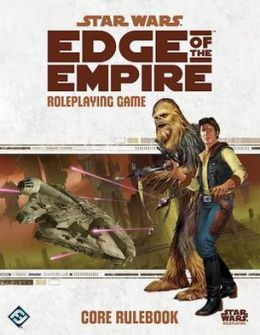
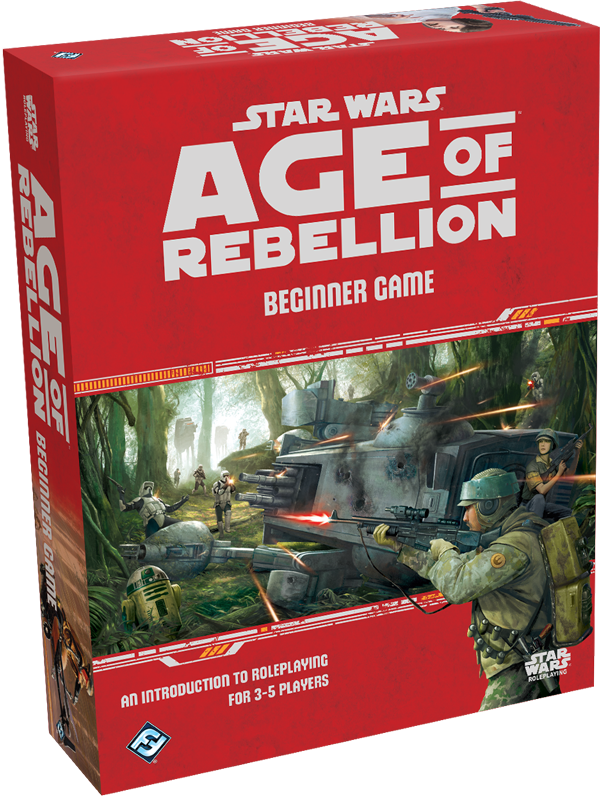
Star Wars Edge of the Empire and Star Wars Age of Rebellion utilize identical systems of character creation and dice use but have entirely different themes and tones. I recently purchased the Age of Rebellion Beginner Box pictured less than an inch above these words. I’ve been flipping through the Edge of Empire rulebook for the past few weeks. Here are my thoughts:

Age of Rebellion is for those persons who want to fight against the Empire. You want to be a rebellion commando or pilot or infiltrator who locates Imperial strongholds and blows them up in the name of galactic freedom. Admirable goals, in my opinion.

Edge of the Empire is all about being a scoundrel. The party is supposed to be a fringe criminal element operating on the outer rim, dodging bounty hunters, blackmail, Imperial patrols, and dwindling supplies to try and catch a break. It’s Firefly in the Star Wars Universe. I drooled a little as I typed that sentence.

The dice pool requires purchasing their unique dice or by utilizing a very complex chart to convert D6s, D8s, and D12s into the necessary symbols. I’m going to give you the short, short version of how these dice work:

  • There are Good dice and Bad dice
  • If you are good at things you get more Good dice
  • If you are trying to accomplish something hard or there’s a time limit you have to roll more Bad dice
  • You have to have more Successes show up on all the dice rolled than Failures
  • Even if you Succeed you may do it in a bad way thanks to secondary symbols and vice versa. You can Fail in a spectacular way.
  • There are also Criticals and Anti-Criticals

I just saved you about 45 minutes of deciphering. You’re welcome.

Both games have classes, sub-classes, and races like any good Tabletop Roleplaying Game. There are equipment charts all over these books, statistics blocks for starships, ideas for what sort of debts your scoundrels might need to pay off eventually, etc.

Here’s what separates Star Wars from your average Tabletop experience. It’s bursting with cool droids (playable), intense ship battles (think asteroid field dogfights, escape runs while trying to get the Hyperdrive to work, intense jaunts through narrow canyons while turbolasers blow dust and sand up onto the sensors), and more planets than you can swing a wookiee at (author’s note: wookiees are more likely to swing you). We’re not talking just Tatooine and Coruscant like you’re sick of. You want to go to Corellia, birthplace of the one and only Han Solo? Read up about it and make it happen. You want to go to Klak’dor VII, home planet of the buttheaded cantina band? I won’t judge. Hoth? Cool place. Cloud City? It’s a cut above the rest. I could sit here and make Star Wars planet puns for a long time and my editor would kill me if I did that.

There are some interesting rules for being a Force Sensitive Exile, as well, but I have to admit I’m not 100% on them. But how could you not want to be something called a Force Sensitive Exile while you’re bouncing from starbase to starbase on your rickety ship and exchanging blaster fire with mercenary lizard people?! Seriously?! WHO DOESN’T WANT THAT?!!!

I want to leave you with one final thought about how incredible I find this Star Wars RPG. Its design accomplishes one of my new favorite things about the Tabletop experience: freedom. You can run a narrow and rigid campaign that forces your players to hunt down a renegade smuggler who stole your previous ship and all the sweet spice you had on it. Or you can bounce from planet to planet, hoping for work and barely scraping by as you outrun the hired guns of a Hutt you crossed three planets ago while you were freeing a Twi’lek Dancer from his prison because she knew the access codes for a shipping crate packed with Corusca Gems. I literally came up with that as I was writing it because STAR WARS.